The Chemical Composition of Wine: What Chemicals are in Wine?

Wine may look simple — just fermented grape juice — but inside every glass lies a remarkably complex blend of chemistry, art, and nature. From its flavor and aroma to its texture and color, everything about wine comes down to the intricate interaction of its chemical components.

Let’s break down what’s actually in your glass: the five elements of wine, the 13 essential minerals, the role of sulfites, and even the five S’s that help you appreciate it like a professional.

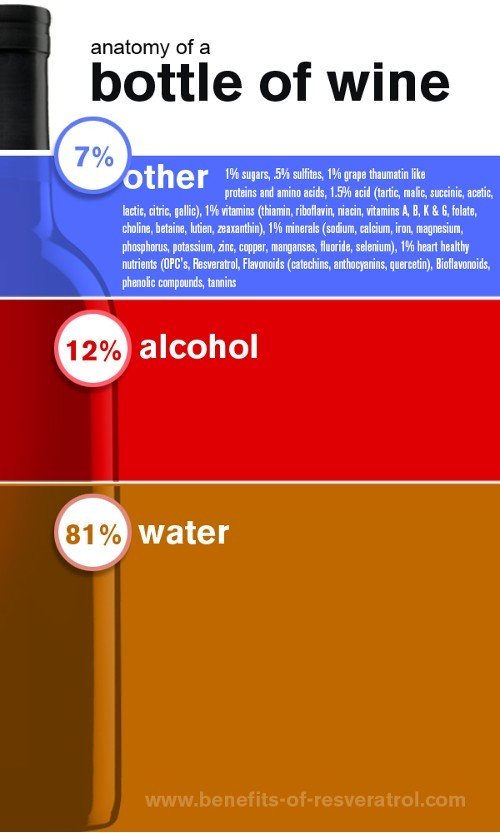
(Complete Chemical Composition of Wine Breakdown Below)
chemical-composition-of-wine

This chemical composition of wine graphic doesn’t represent every wine, but was put together as a baseline of what’s in wine. Red wines vary in alcohol content from 11% – 15% generally, which would change the above model.

Also if you read The Healthiest Wines article, you’ll see that the resveratrol content can vary depending on the growing conditions as well.

The 5 Elements of Wine

Every wine, regardless of its variety or origin, can be described through five essential elements. These components shape how wine tastes, smells, and feels on your palate.

  1. Alcohol – Created during fermentation when yeast converts sugar into ethanol. Alcohol adds body, warmth, and texture to wine. Most wines range from 11% to 15% alcohol by volume.
  2. Acid – Acidity provides brightness and freshness. Tartaric, malic, and citric acids are naturally present in grapes and give wine its crisp, lively edge.
  3. Sugar – The residual sugar left after fermentation influences sweetness. Dry wines have little to no residual sugar, while dessert wines retain more.
  4. Tannin – These naturally occurring compounds come from grape skins, seeds, and stems. Tannins give structure, astringency, and aging potential, especially in red wines.
  5. Water – Often overlooked, water makes up about 85% of a glass of wine, acting as the solvent that carries all other elements.

Together, these five components create the balance and complexity that define each wine’s personality.

Vitamin Content of Wine

  • thiamin
  • riboflavin
  • niacin
  • Vitamins A, B, K & G
  • folate
  • choline
  • betaine
  • lutein
  • zeakanthin

Mineral Content of Wine

⚗️ The 13 Essential Minerals in Wine

Beyond alcohol and acids, wine contains trace amounts of minerals absorbed by the vines from the soil. These minerals subtly influence flavor, mouthfeel, and even color stability.

  1. Potassium (K) – Helps balance acidity and stabilize color.
  2. Calcium (Ca) – Affects wine’s tartaric stability.
  3. Magnesium (Mg) – Supports yeast metabolism during fermentation.
  4. Sodium (Na) – Adds a slight salty nuance; too much can be undesirable.
  5. Iron (Fe) – Influences color and oxidation reactions.
  6. Copper (Cu) – In very small amounts, aids fermentation; too much can spoil wine.
  7. Zinc (Zn) – Essential for yeast health during fermentation.
  8. Manganese (Mn) – Contributes to enzymatic activity and flavor stability.
  9. Phosphorus (P) – Supports yeast energy and fermentation.
  10. Fluoride (F) – Naturally present in trace amounts; regulated for safety.
  11. Boron (B) – Important for vine growth; trace residues remain in wine.
  12. Lithium (Li) – Present in microdoses from certain soils.
  13. Rubidium (Rb) – A trace element sometimes used to identify wine origin (terroir marker).

These minerals don’t dominate flavor, but they help explain why wines from different regions — even from the same grape — taste unique.

Heart Healthy Nutrient Content of Wine

What Are the Sulfites For?

Sulfites (or sulfur dioxide, SO₂) are one of the most discussed yet misunderstood components in wine.

What they do:

  • Preserve freshness: Sulfites prevent oxidation, which can cause browning and spoilage.
  • Control bacteria and yeast: They keep unwanted microbes from turning wine into vinegar.
  • Stabilize flavor and color: Sulfites help maintain consistency from bottling to pouring.

All wines naturally produce a small amount of sulfites during fermentation, and most winemakers add more for stability, especially in white and sweet wines.

Fact check: Sulfites are not the main cause of wine headaches. Most people are not sensitive to sulfites; dehydration and histamines from tannins are more common culprits.

If you’re highly sensitive or prefer minimal-intervention wines, look for bottles labeled “low-sulfite” or “no added sulfites.”

Other Chemical Compounds in Wine

  • Sugar
  • Grape Thumatin-like proteins
  • Amino Acids
  • Citric Acid
  • Gallic Acid
  • Tartic Acid
  • Mallic Acid
  • Succinic Acid
  • Acetic Acid
  • Lactic Acid

Final Thoughts

The chemical composition of wine is a masterpiece of natural science — a blend of elements, minerals, and organic compounds working in harmony. Every swirl of your glass tells a story of soil, sun, and skill, shaped by the invisible chemistry that makes each vintage distinct.

Whether you’re exploring minerality in a Chardonnay or the tannic structure of a Cabernet Sauvignon, knowing what’s inside the glass deepens your appreciation for this timeless drink.

A Little Bit Deeper Research

There is so much to learn in the world of resveratrol, antioxidants, superfoods and wine. This is the place to start, no matter what, if you indeed are looking to maximize your health and live longer.
“Resveratrol Resveratrol Enhanced Wine

Reportedly there are nine wineries in the Rioja province in Spain also looking to make resveratrol enhanced wines.
“Health Health Benefits of White Wine

There are different types of antioxidant molecules and the antioxidants found in white wine actually has increased beneficial effects on the health than those found in red.
“Health Health Benefits of Drinking Wine

The health benefits of drinking wine come from the chemical makeup of the wine, not necessarily the alcohol.
“Are Are Red Wine Headaches About Sulfites?

Maybe Sulfites aren’t the only reason red wine gives headaches.
“What What Are the Healthiest Wines?

Determining the healthiest wines is not so hard if you look at one aspect at a time.
If you enjoy this site, please share the page you were reading on Social Media or link to it from your site.